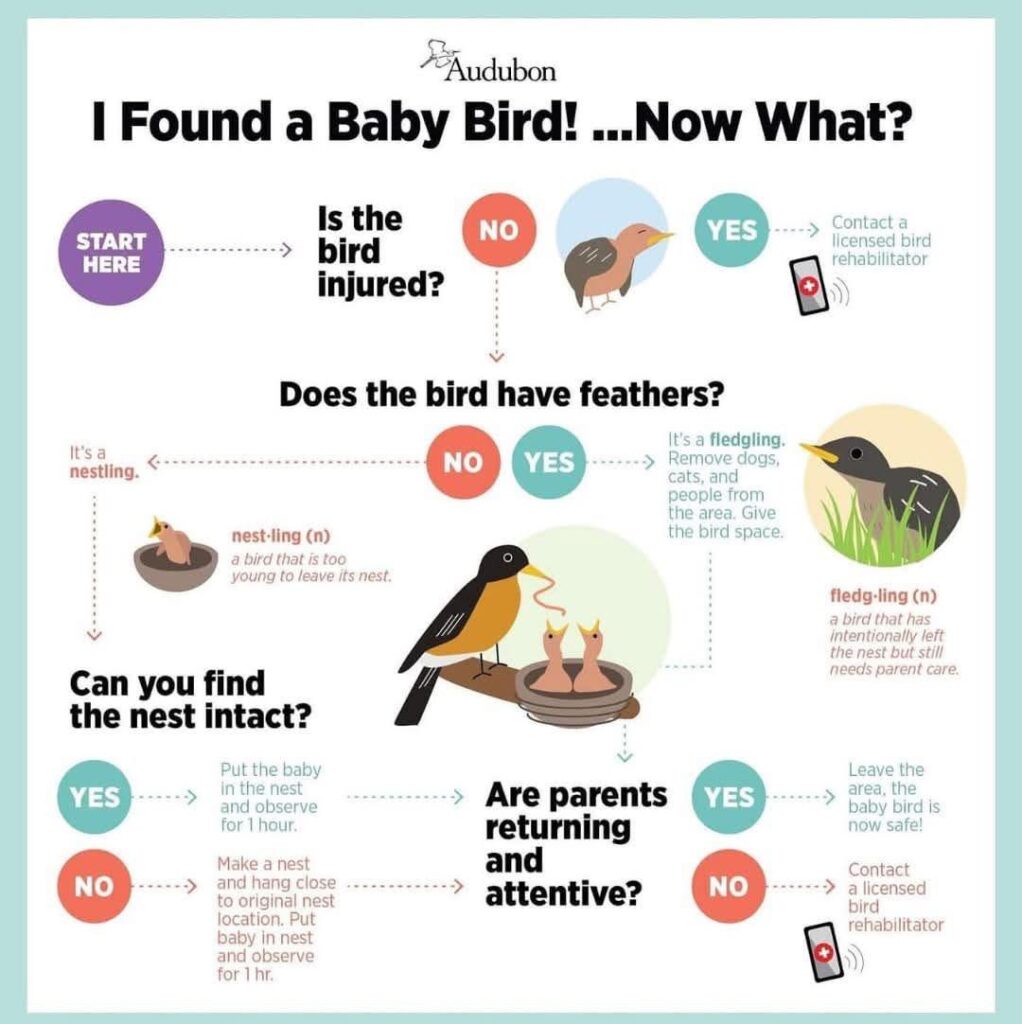
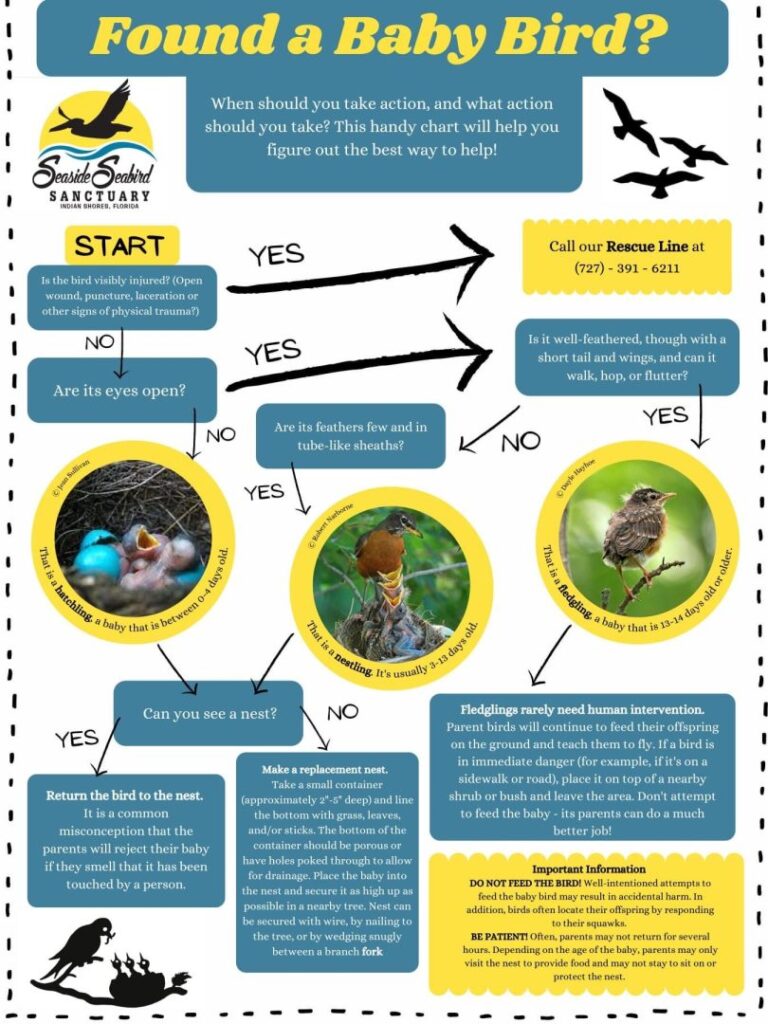
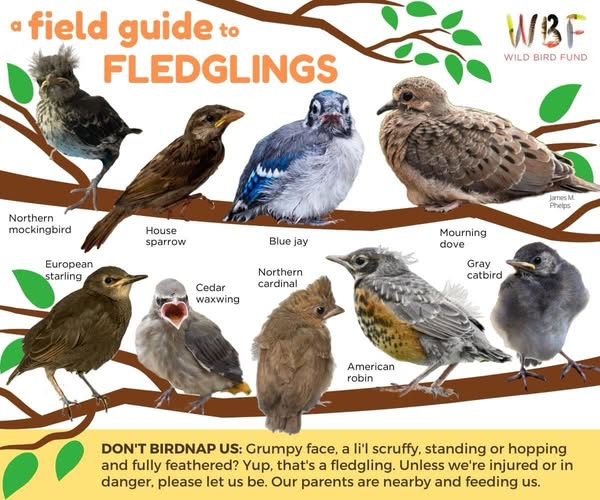
Birdnapping is when well-meaning people “rescue” fledgeling birds that don’t actually require human intervention. It causes undue stress to the animals, and taxes the already overburdened wildlife rehabbing community (most of whom operate without any financial support from local, state, and federal government). Keeping native birds in your home can also be a violation of federal law.
Which is not to say that baby birds don’t sometimes require help. Knowing when to intervene, as well as how to contact certified wildlife rehabbers in your area, are critical pieces of information. When in doubt, reach out for answers.
Fledgelings have just left the nest but are in a normal part of bird development. They are often mistaken for injured birds, but are just going through the awkward process of learning to be a bird, and usually don’t require human intervention.
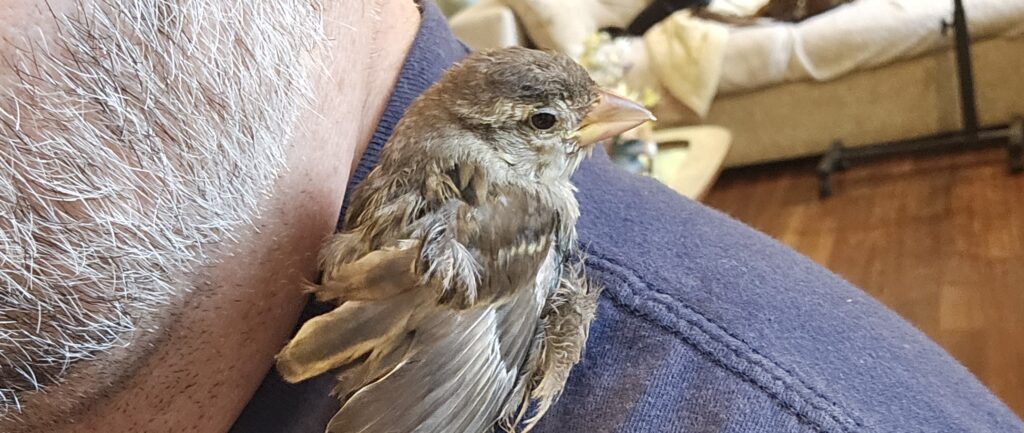
“Cheepie” is our pet house sparrow. She was found on the ground after a wind storm in Virginia. The people who found her couldn’t find a nest to return her and instead contacted a local rehabber. Rehabbers are legally prevented from caring for non-native species like house sparrows and starlings, but luckily for Cheepie (and us), we were working that day and decided to take her home. What started as an exercise in learning to care for baby birds has become a long-term love, and we expect to spend time with her for many years to come. What we’ve learned in caring for her will help us better care for other rescued house sparrows.
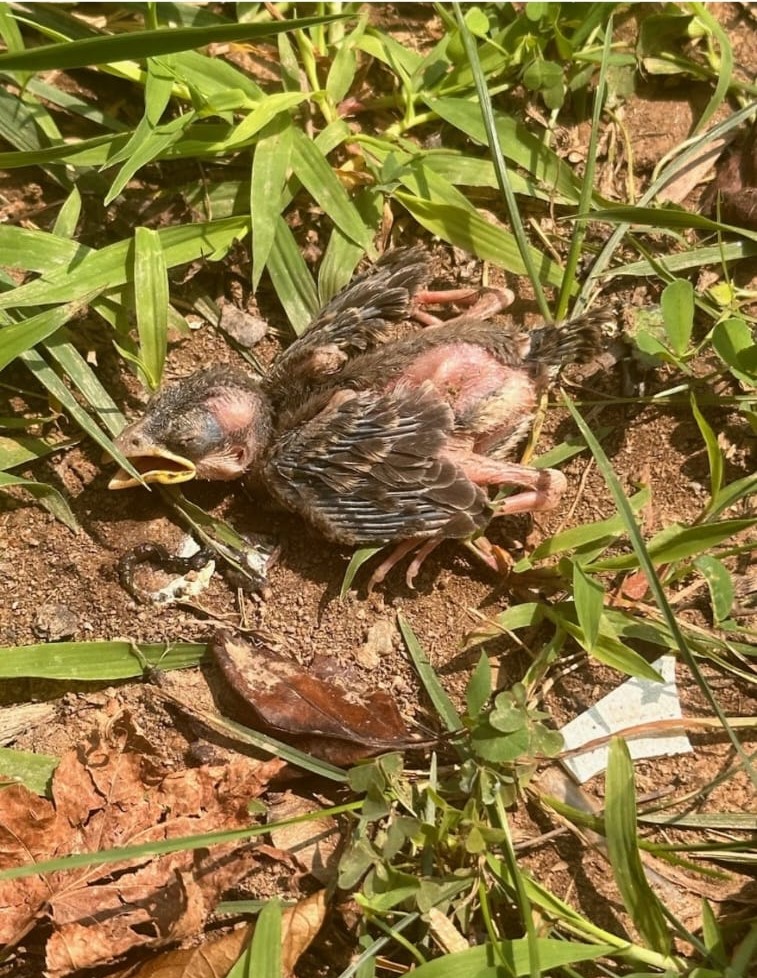
Image sent to the rehabber, clearly indicating that the bird is a nestling (closed eyes, bare skin, undeveloped feathers) and in distress.
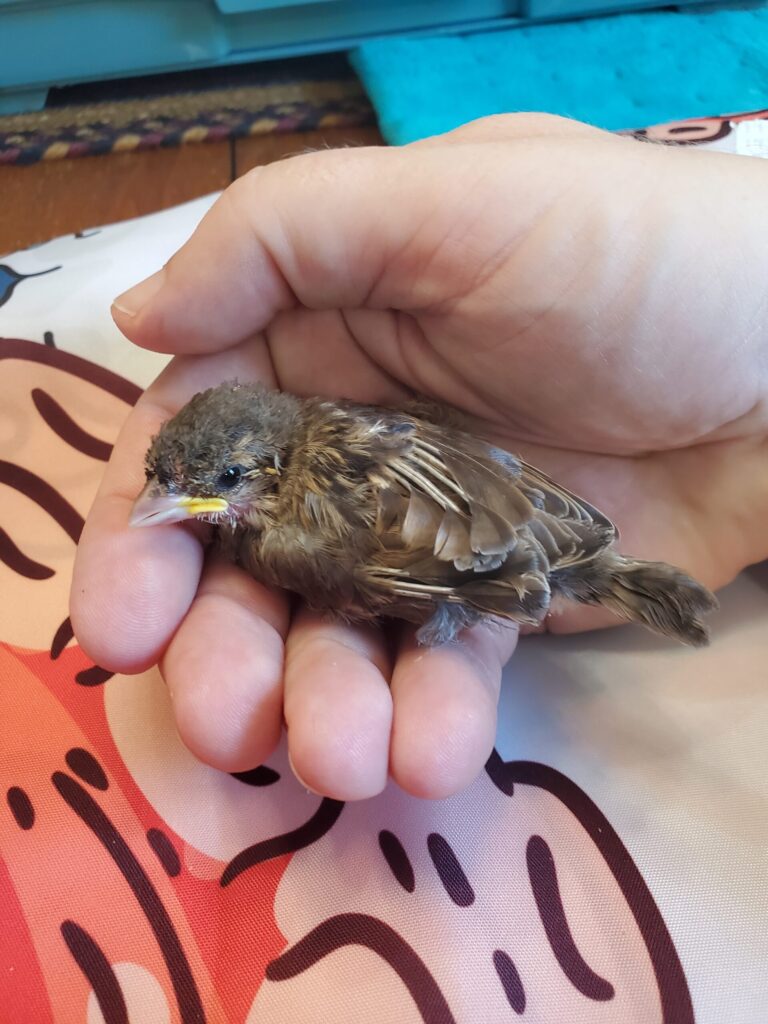
Cheepie after 2 weeks of 24/7 care and feeding. She’s in the fledgeling stage.
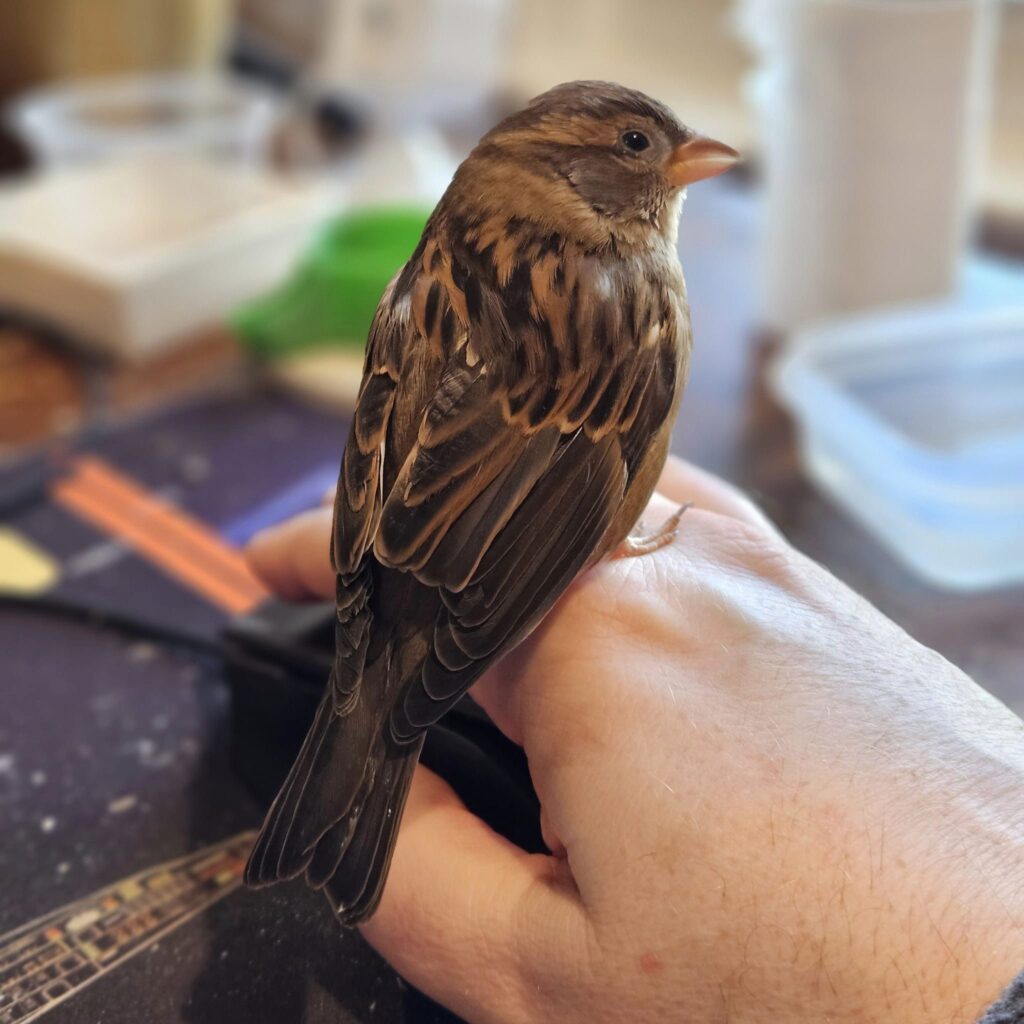
Cheepie is now 2 1/2 years old, and likes to “help” when we telework.